



The Grit and Glory of the Archipelago
The first time I stood on the rim of a volcano in Indonesia, it wasn’t the view that got to me. It was the smell. A pungent, thick scent of sulfur that felt like it was etching itself into my lungs. My boots were caked in a fine, grey dust that seemed to have a life of its own, and my calves were screaming in a language I didn’t yet understand. That’s the reality of hiking in this country. It isn’t just about the Instagram-worthy sunrise; it’s about the humidity that clings to your skin like a wet blanket and the sheer, vertical madness of trails that don’t believe in switchbacks. Indonesia doesn’t do “gentle strolls.” It does epic, soul-crushing, and life-affirming ascents.
I’ve spent the better part of a decade wandering through the Ring of Fire. I’ve learned that every peak has a personality. Some are moody and shrouded in mist, while others are aggressive, spitting ash and reminding you exactly who is boss. If you’re looking to trade the air-conditioned comfort of a city for something a bit more raw, here is where you should put your feet.
The Majesty of Mount Rinjani, Lombok
If there is a king of Indonesian treks, Rinjani wears the crown. This isn’t just a mountain; it’s a geological masterpiece. Most people think they’re ready for it, but then they hit the “Seven Hills of Regret” on the way to Sembalun. The name isn’t an exaggeration. By the fourth hill, you start questioning your life choices. But then you reach the crater rim, and everything changes. Looking down into the Segara Anak lake, with the smaller smoking cone of Gunung Baru Jari sitting right in the middle, is a sight that makes your brain short-circuit.
The summit push usually starts at 2 AM. It’s a brutal crawl through loose volcanic scree—two steps forward, one slide back. It’s frustrating. It’s cold. But standing at 3,726 meters as the sun breaks over the horizon, casting a perfect triangular shadow of the mountain across the sea toward Bali, is a spiritual experience. I’ve seen grown men cry up there, and it wasn’t just because of the altitude.
Mount Semeru and the Sand of Java
Semeru is the highest point in Java, and it demands respect. The journey through the alpine meadows of Oro-Oro Ombo, which turn purple when the verbena blooms, feels like a fever dream. But don’t let the flowers fool you. The final ascent from Kalimati camp to the summit is a vertical sandbox. There is no trail, just a massive slope of grey ash. You have to timing your breathing with the mountain’s hiccups—Semeru erupts every 20 minutes or so, sending a plume of smoke into the sky. It’s a reminder that the ground beneath you is very much alive. It’s exhausting, but reaching the Mahameru summit feels like standing on the roof of the world.
The Sunsets of Mount Prau, Dieng
Not every hike needs to be a multi-day odyssey. Prau is the “weekend warrior” favorite, but that doesn’t mean it’s mediocre. In fact, for the effort required, the payoff is arguably the best in the country. The plateau at the top is wide and grassy, often referred to as the “Teletubbies Hills.” On a clear morning, you can see the perfect alignment of Sindoro, Sumbing, Merapi, and Merbabu in the distance. It’s a panoramic shot that looks like it was painted by someone with an obsession for symmetry. I often recommend Prau to friends who want the “summit feeling” without the three-day pain cycle.
Mount Kerinci: Into the Sumatran Jungle
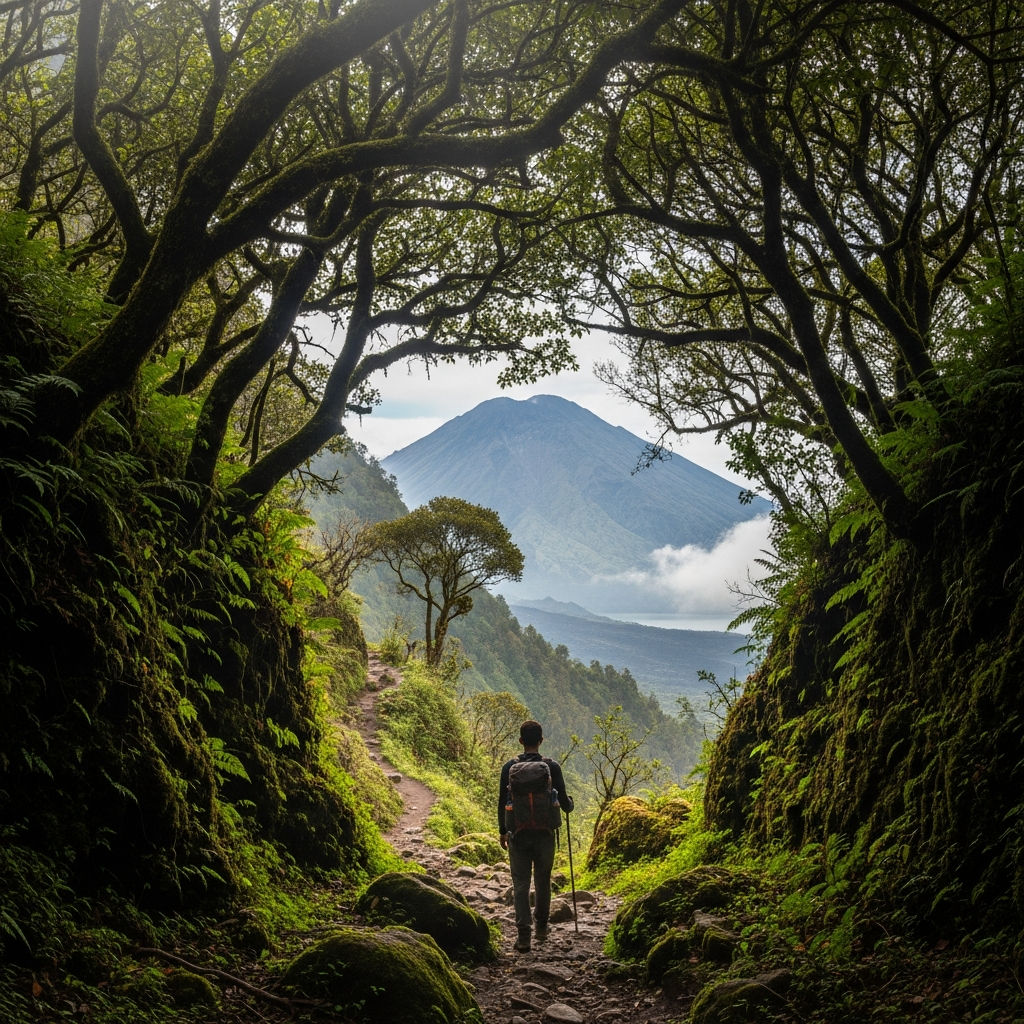
Sumatra is a different beast entirely. While Java’s mountains often feel managed, Kerinci feels wild. This is the highest volcano in Indonesia, tucked away in the Kerinci Seblat National Park. The trail is essentially a tunnel through dense, ancient rainforest. You’re stepping over massive roots and ducking under low-hanging vines. There’s a distinct possibility of seeing tracks from a Sumatran tiger—or at least, that’s what the local guides tell you to keep you moving. The humidity is thick enough to chew, and the mud can be waist-deep after a rain. But when you break through the tree line and see the emerald landscape of Sumatra stretching out below, the struggle evaporates.
The Blue Fire of Ijen Crater
Ijen is less of a hike and more of a descent into another planet. Most people start at midnight to catch the “Blue Fire”—a rare phenomenon caused by the combustion of sulfuric gases. Seeing those electric blue flames dancing in the dark is surreal. But the real story of Ijen is the sulfur miners. Passing these men as they carry 80kg loads of yellow stone up a steep crater wall while you’re struggling with a light daypack is a humbling reality check. The turquoise acid lake at the bottom is beautiful, but it’s a toxic beauty. Bring a gas mask; your lungs will thank you.
Mount Merapi: The Fire Breather
Merapi is the most active volcano in the country, and hiking it feels like a flirtation with danger. The landscape is scarred by recent flows, and the path is often obscured by fresh ash. There’s an undeniable tension in the air here. It’s a short, steep climb from the New Selo side, but the terrain is unstable. Why do we do it? Because Merapi offers a raw look at the earth’s destructive power. Standing near the steaming crater, hearing the mountain rumble, you realize how small and temporary we really are. It’s a perspective you can’t get in a shopping mall.
The High Altitude Silence of Carstensz Pyramid
This is the outlier. Located in Papua, Carstensz (Puncak Jaya) is one of the Seven Summits. It’s not a volcanic trek; it’s a technical rock climb in one of the most remote places on Earth. You’re dealing with glaciers in a tropical country. The logistics are a nightmare, and the cost is astronomical, but for the elite hiker, it’s the ultimate Indonesian trophy. It’s cold, jagged, and unforgiving. I haven’t met many who have conquered it, but those who do speak of it with a kind of hushed reverence.
Mount Lawu and the Highest Warung
Lawu is steeped in mysticism. There are ruins of ancient temples scattered on its slopes, and many locals climb it for pilgrimage rather than sport. But for me, the highlight of Lawu isn’t the spiritual energy—it’s Mbok Yem. Near the summit sits a small shack (warung) where a legendary woman named Mbok Yem has lived for decades, serving hot tea and nasi pecel to tired hikers. Eating a warm meal at 3,000 meters while the wind howls outside is a luxury that feels better than a five-star hotel. Lawu is a long, steady grind, but the “civilization” at the top makes it uniquely charming.
Mount Agung: Bali’s Sacred Peak
Everyone goes to Bali for the beaches, but the real soul of the island is Mount Agung. It is the highest point on the island and deeply sacred to Balinese Hindus. The hike is a vertical lung-buster. There are no flat sections to catch your breath. It’s a relentless upward trajectory through forest and then over bare rock. Starting from Pasar Agung temple, you’re basically climbing a giant staircase of stone. When you reach the top, you’re looking down on the entire island, with the silhouette of Rinjani visible across the strait. It’s a physical sacrifice for a heavenly view.
Mount Bromo: The Ethereal Wasteland
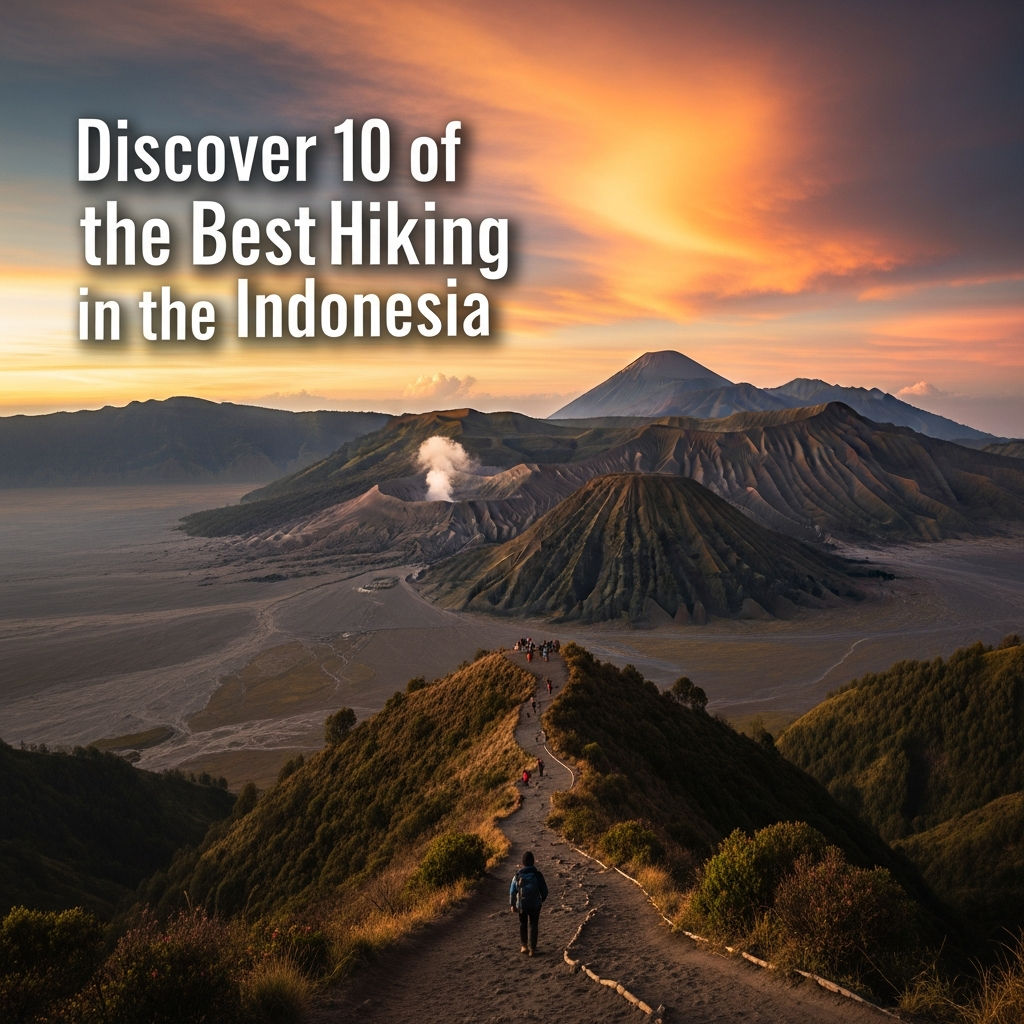
I’ll be honest: Bromo is crowded. You’ll be sharing the sunrise with hundreds of others. But there’s a reason for it. The Sea of Sand, the smoking crater, and the backdrop of Mount Batok create a landscape that looks like it belongs on Mars. Instead of following the jeep tours, I prefer hiking the surrounding ridges of the Tengger caldera. It gives you a sense of scale that you miss when you’re stuck in traffic. Bromo proves that a place doesn’t have to be isolated to be breathtaking. Just get there early, find a quiet spot on the ridge, and watch the mist roll across the volcanic plain.
Hiking in Indonesia isn’t about ticking boxes on a list. It’s a messy, sweaty, and often painful dialogue with nature. You’ll ruin your gear, you’ll lose a few toenails, and you’ll definitely swear you’re never doing it again. Then, you’ll see the clouds parting over a jagged crater rim, and you’ll start planning your next ascent before you’ve even reached the bottom. That’s the addiction of the archipelago.


