


We will journey through the many layers of Singapore. We will marvel at its futuristic icons, but we will also delve deep into its multicultural heart, discovering the vibrant historic neighborhoods of Chinatown, Little India, and Kampong Glam. We will uncover the unique Peranakan culture, escape to a wild island that feels like a time capsule, and, most importantly, eat our way through its legendary hawker centres. This is a journey to understand how meticulous planning, a celebration of diversity, and a profound respect for nature created one of the most fascinating and dynamic destinations on Earth.
Singapore’s story is one of incredible density and detail. To do it justice, this comprehensive guide is presented as a multi-part series. Each section will build upon the last, revealing a new facet of the Lion City’s character. We begin by understanding the blueprint of Singapore’s success, before visiting the very places that define its future and its past.
To appreciate Singapore’s destinations, one must first appreciate the audacious vision that created them. Unlike many cities that grew organically, modern Singapore is the result of meticulous, long-term planning.
From Swamp to Metropolis: A Story of Innovation
When Singapore gained independence in 1965, it was a small island with no natural resources. Its first Prime Minister, Lee Kuan Yew, championed a vision of transformation. A core part of this was the “greening” of Singapore—a deliberate policy to weave nature into the urban fabric. This was not just for aesthetics; it was a strategy to improve the quality of life, attract foreign investment, and create a sustainable, livable city. The stunning green spaces you see today are the direct result of this decades-long national project.
The Hawker Centre: A UNESCO World Heritage Soul
You cannot understand Singapore without understanding its hawker centres. These are not mere food courts; they are, as described in their UNESCO Intangible Cultural Heritage designation, “community dining rooms.” These large, open-air complexes house dozens of small, family-run stalls, each specializing in a few specific dishes passed down through generations. This is where Singaporeans from all walks of life—from taxi drivers to bank CEOs—come together to eat. It is the most democratic, authentic, and delicious way to experience the nation’s multicultural culinary scene, offering a staggering variety of Chinese, Malay, Indian, and Peranakan food at incredibly affordable prices.
The Futuristic Green City: Where Nature and Technology Merge
Nowhere is Singapore’s “City in a Garden” vision more spectacularly realized than in its modern, headline-grabbing attractions.
Gardens by the Bay: A Supertree Wonderland
This is not just a park; it is a 101-hectare horticultural masterpiece and a showcase for sustainable energy and water management. It is a vision of how cities of the future can integrate nature.
- The Supertree Grove: The iconic, tree-like vertical gardens, ranging from 25 to 50 meters in height. These are not just sculptures; they are complex engines, with canopies that harvest solar energy and collect rainwater. Take the OCBC Skyway for a walk among the canopies, and be sure to return at night for the Garden Rhapsody, a dazzling, free light and sound show that brings the Supertrees to life.
- The Cloud Forest: Step inside this massive, climate-controlled glass dome and you are greeted by a cool, misty mountain climate and the world’s tallest indoor waterfall. A walkway spirals up and around this “Cloud Mountain,” taking you through different levels of a tropical highland ecosystem.
- The Flower Dome: The largest glass greenhouse in the world, this dome replicates a cool, dry Mediterranean climate and features a stunning, ever-changing display of flowers and plants from around the globe.
Jewel Changi Airport: The World’s Most Spectacular Gateway
Only in Singapore could an airport itself be a world-class destination. Jewel Changi is a breathtaking lifestyle and retail complex that has completely redefined the concept of an airport.
- The HSBC Rain Vortex: The centerpiece and an instant global icon. It is the world’s tallest indoor waterfall, cascading 40 meters from the roof of the massive glass and steel dome. By day it is a magnificent spectacle of nature; at night, it becomes the canvas for a mesmerizing light and sound show.
- The Shiseido Forest Valley: Surrounding the vortex is a four-story indoor forest, a lush, terraced garden with walking trails and thousands of trees and shrubs. It is a calming, green oasis in the middle of a bustling international hub.
Jewel is a statement of intent: a testament to Singapore’s ambition to be the best, and to integrate nature and design into every aspect of its infrastructure.
Read Also: Top Destinations in England: Beyond the Obvious
The Colonial Heart: The Civic District
To understand Singapore’s future, you must also understand its past. The historic Civic District, centered around the mouth of the Singapore River, is where the story of modern Singapore began. This is where Sir Stamford Raffles first established a British trading post in 1819, setting the stage for the city’s rise.
Where Modern Singapore Began
A walk through this area is a journey through colonial history, with many of the grand buildings now beautifully repurposed.
- The Fullerton Hotel and Cavenagh Bridge: The magnificent Fullerton Hotel is one of the city’s grandest landmarks. It is housed in the former General Post Office building, a neoclassical masterpiece from 1928. It stands guard over the historic Cavenagh Bridge, the oldest bridge across the Singapore River.
- The National Gallery Singapore: A must-visit for any art and history lover. This spectacular gallery is housed in two beautifully restored national monuments: the former Supreme Court and City Hall. It holds the largest public collection of Singaporean and Southeast Asian art in the world, offering a profound insight into the history and culture of the entire region.
- The Merlion: No visit is complete without seeing the city’s official mascot. The Merlion, a mythical creature with the head of a lion and the body of a fish, represents Singapore’s origins as a fishing village (“Temasek”) and its original name, “Singapura” (Lion City). While undeniably touristy, its location offers one of the most iconic photo opportunities in the world, perfectly framing the magnificent Marina Bay Sands complex across the water.
This district, where the historic architecture of the British Empire now stands in the shadow of the skyscrapers it enabled, is a powerful symbol of Singapore’s journey from a colonial outpost to a global powerhouse.
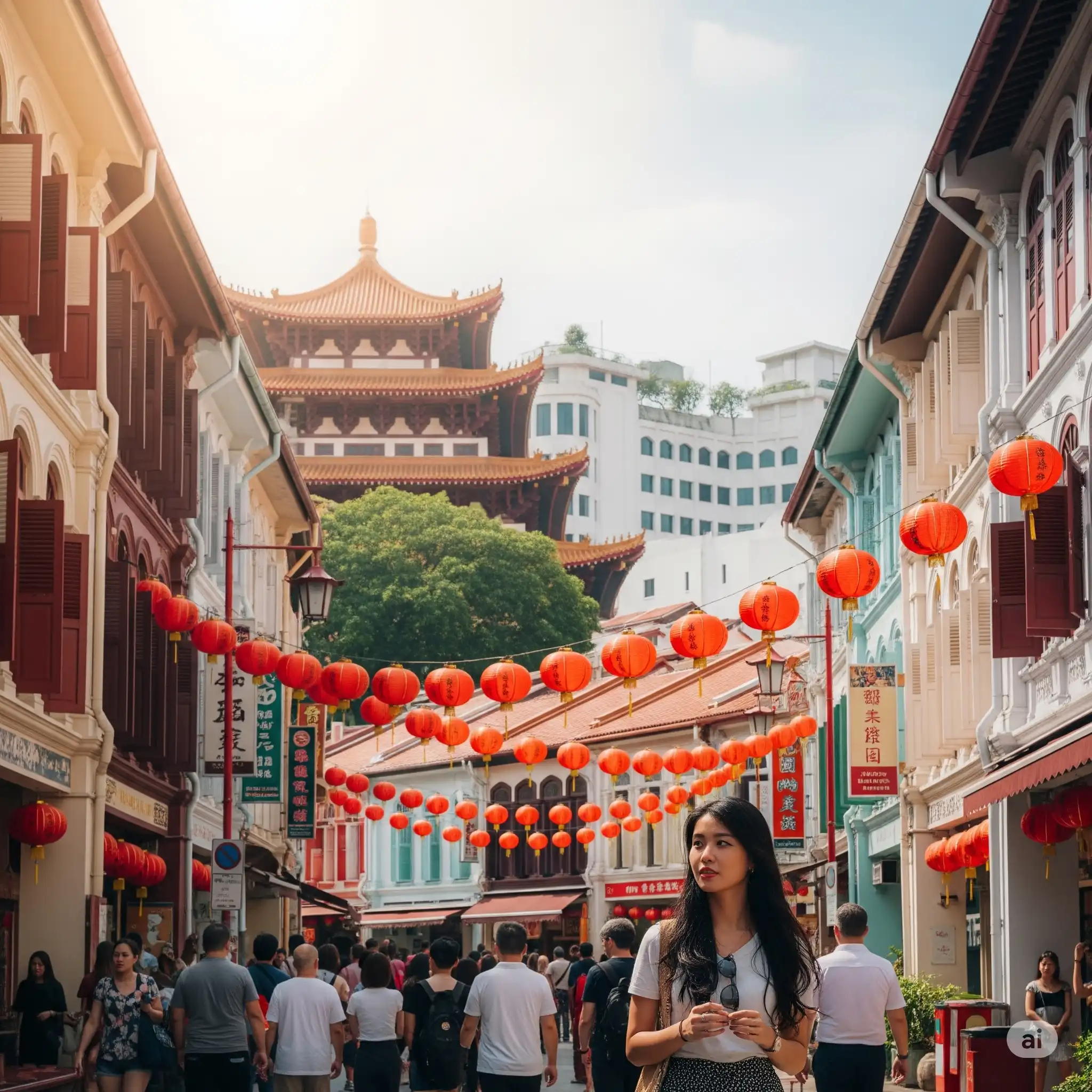
Chinatown (牛车水): A Blend of Sacred Traditions and Modern Cool
Singapore’s Chinatown is a dazzling blend of old and new. It is a place where ancient temples sit next to hidden speakeasy bars, and traditional medicine halls operate just doors down from award-winning, Michelin-starred restaurants. The name in Chinese, Niu che shui (牛车水), literally means “bullock cart water,” a reference to the carts that were used to haul water for the district in the 19th century.
A Street of Harmony: The Temples of Telok Ayer
Telok Ayer Street is a remarkable testament to Singapore’s religious coexistence. Within a few short steps, you can visit:
- Thian Hock Keng Temple (天福宫): The oldest and one of the most important Hokkien temples in Singapore. Dedicated to the goddess of the sea, it was the first stop for grateful Chinese immigrants who had survived the perilous journey across the South China Sea. It is a stunning masterpiece of traditional Southern Chinese architecture, constructed in 1842 without the use of a single nail.
- Nagore Dargah Shrine and Al-Abrar Mosque: Just down the same street are these historic places of worship, built by the early Chulia Muslim immigrants from India’s Coromandel Coast.
The Buddha Tooth Relic Temple and Museum
A more recent, but no less spectacular, landmark is this grand temple, built in a Tang dynasty style. Its main draw is the sacred relic it houses, but visitors can also explore a comprehensive museum on Buddhist history and culture, and find a moment of peace in the serene rooftop garden, complete with a large prayer wheel.
From Shophouses to Speakeasies
The architecture of Chinatown is defined by its beautifully restored shophouses, with their colorful facades and intricate details. While many still house traditional businesses, the surrounding streets—like Keong Saik Road, Club Street, and Ann Siang Hill—have been transformed into one of Singapore’s trendiest districts. Behind unassuming doors, you’ll find some of the city’s best restaurants and world-renowned cocktail bars, making this a perfect destination that transitions from historical exploration by day to sophisticated revelry by night.
Little India: A Vibrant Sensory Overload
Step off the MRT at Little India, and you are instantly transported. This is arguably Singapore’s most vibrant and sensory neighborhood. The air is thick with the scent of jasmine garlands and fragrant spices, the streets pulse with the sounds of Bollywood music, and the shops are a riot of color, filled with shimmering silk saris and intricate gold jewelry.
Sacred Spaces
- Sri Veeramakaliamman Temple: One of the oldest and most spectacular Hindu temples in Singapore, this complex is dedicated to the fierce goddess Kali, the destroyer of evil. Its most striking feature is the magnificent gopuram (entrance tower), which is covered in hundreds of intricate, colorful statues of Hindu deities. Remember to remove your shoes before entering and to dress modestly.
Shopping and Sustenance
- Mustafa Centre: A true Singaporean institution. This is not a glamorous mall, but a sprawling, chaotic, 24-hour retail emporium where you can buy literally anything and everything. From high-end electronics and gold to groceries, textiles, and spices, Mustafa Centre is a dizzying and unforgettable shopping experience.
- Tekka Centre: This is the true heart of the Little India community. It is a multi-story complex that houses a bustling wet market on the ground floor (selling fresh produce, meat, and fish), a massive hawker centre specializing in Indian cuisine (the biryanis and roti prata here are legendary), and shops on the upper floors selling traditional Indian clothing.
Kampong Glam: The Malay-Arab Heritage District
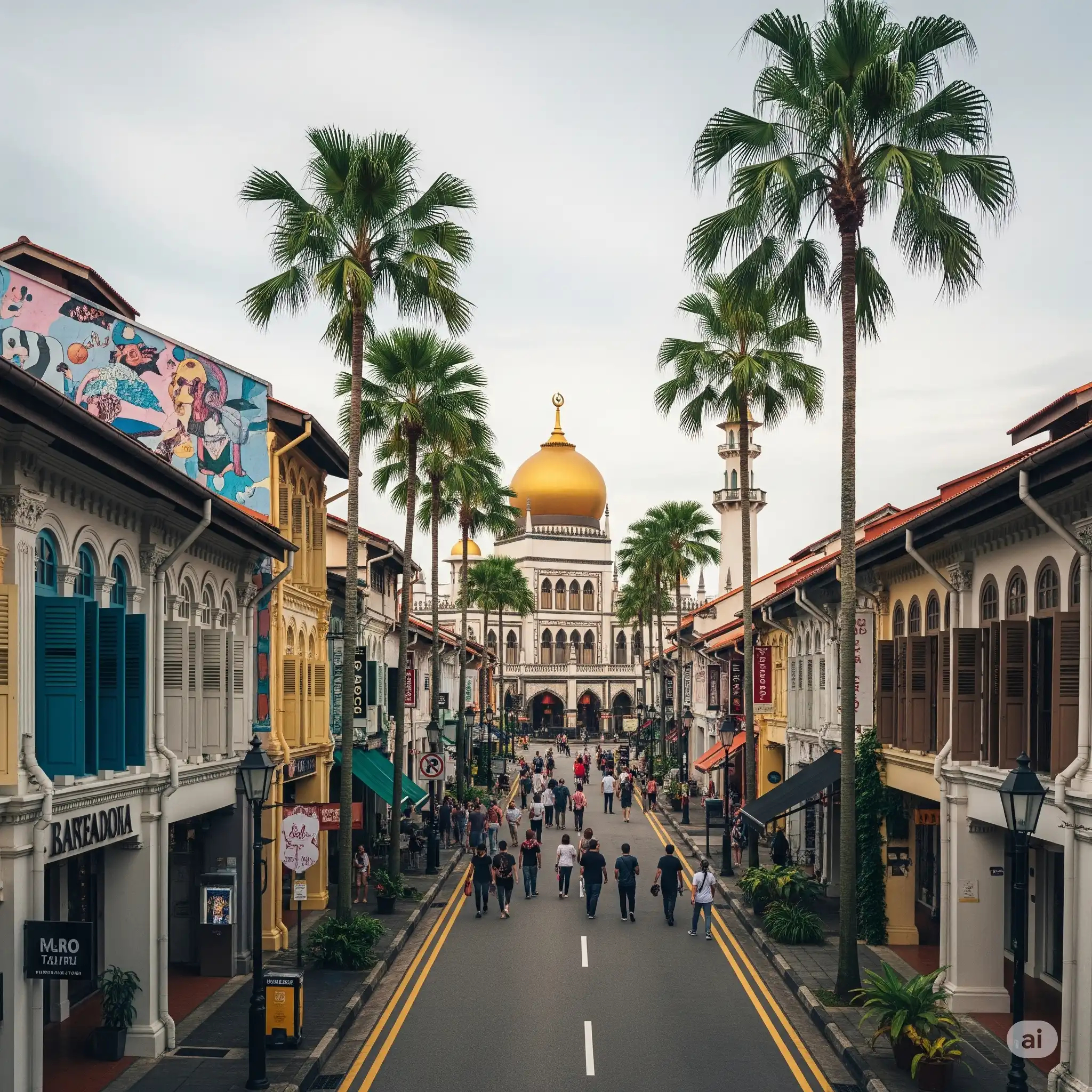
Kampong Glam is the historic heart of Singapore’s Malay and Arab communities. In the 19th century, this area was allocated by Sir Stamford Raffles to the Malay Sultan and his household, as well as Arab and Bugis traders. Today, it is a charming and eclectic neighborhood where historic tradition meets independent, hipster cool.
The Majestic Sultan Mosque (Masjid Sultan)
The magnificent, golden-domed Sultan Mosque is the focal point of the neighborhood and a national monument. It is the heart of the Muslim community in Singapore.
- A Lesser-Known Detail: Look closely at the base of the main golden dome. You’ll see it is decorated with a ring of black, glass bottle ends. This is a poignant piece of the mosque’s history; during its reconstruction in the 1920s, it was decided that all Muslims, rich and poor, should be able to contribute. Poorer members of the community donated the soy sauce bottles, which were then incorporated into the design, forever symbolizing that this great mosque was built by the entire community.
Haji Lane: The Indie Haven
Just a stone’s throw from the historic grandeur of the mosque lies Haji Lane, the undisputed epicenter of Singapore’s independent scene. This incredibly narrow lane is famous for its vibrant, large-scale street art murals that cover the sides of the shophouses. The lane is packed with independent fashion boutiques showcasing local designers, quirky gift shops, and cool cafes. At night, it transforms into a lively hub with small, atmospheric bars.
Arab Street and Bussorah Street
The streets surrounding the mosque, particularly Arab Street and the pedestrianized Bussorah Street, retain their historic character. They are lined with shops selling traditional textiles, beautiful Persian carpets, handmade perfumes (attar), and Middle Eastern lamps and souvenirs.
Joo Chiat and Katong: The Peranakan Legacy
In the eastern part of the island lies one of Singapore’s most beautiful and culturally rich residential districts. The areas of Joo Chiat and Katong are the heartland of Peranakan culture, offering a glimpse into a unique and colorful heritage.
Who are the Peranakans? A Unique Hybrid Culture
The Peranakan Chinese, also known as the Straits Chinese or Baba-Nyonya, are the descendants of early Chinese traders who settled in the Malay archipelago (particularly in Singapore, Malacca, and Penang) centuries ago. Over time, they adopted or assimilated many local Malay and Indonesian customs, creating a unique hybrid culture that is a true fusion of Chinese and Southeast Asian traditions. This is evident in their language (a creole of Hokkien and Malay), their intricate fashion (the elegant Nyonya Kebaya), and most famously, their exquisite food.
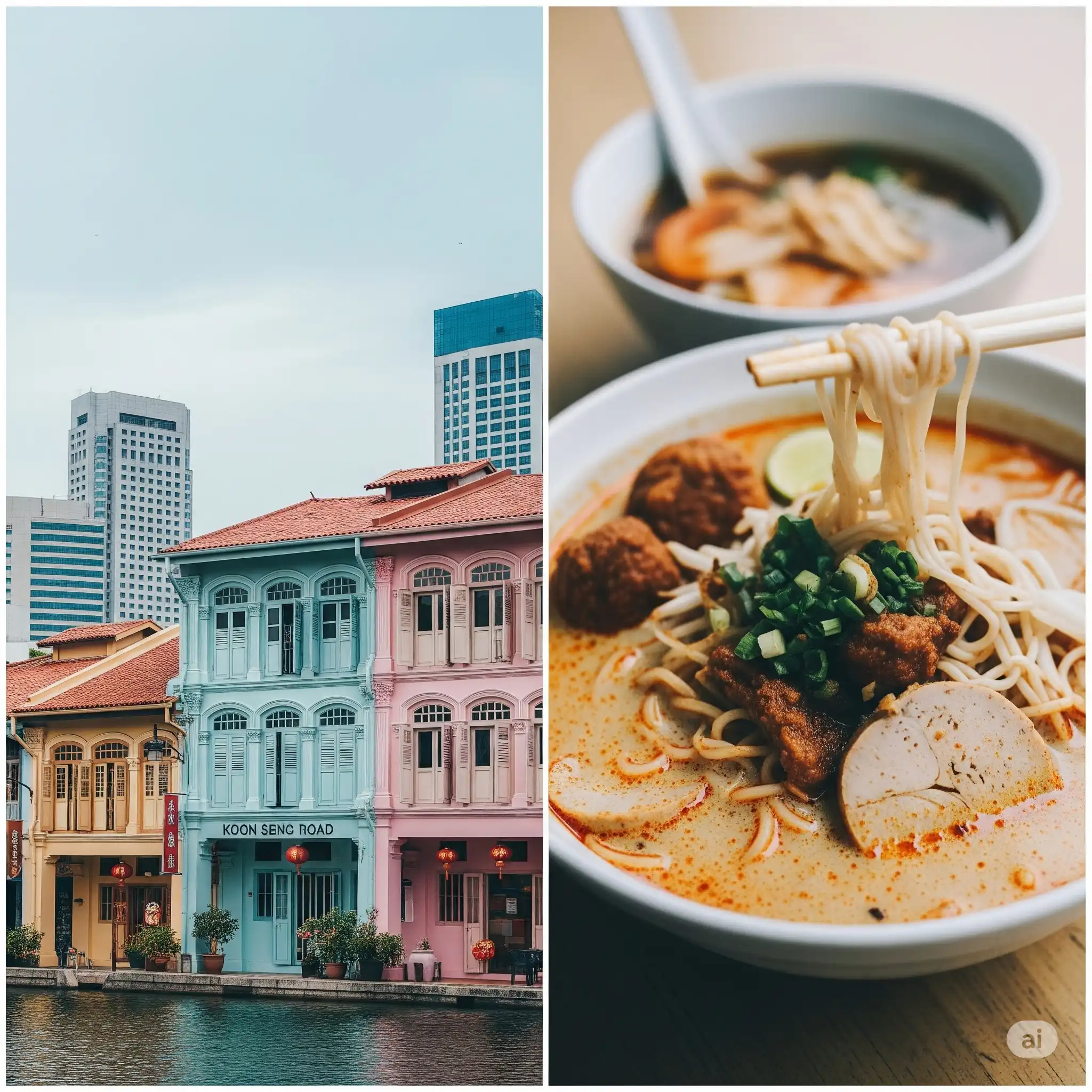
The Pastel Shophouses of Koon Seng Road
The most photogenic and iconic representation of Peranakan culture is the row of perfectly preserved pre-war shophouses, especially along Koon Seng Road. These beautiful buildings are famous for their pastel-colored facades, intricate floral motifs, and the beautiful, imported ceramic tiles (majolica tiles) that adorn their walls. A stroll down this street is like walking through a real-life art gallery and is an absolute must for any photographer or lover of architecture.
The Taste of Nyonya Cuisine
Food is central to Peranakan culture, and the Katong neighborhood is the undisputed epicenter of Nyonya cuisine. This style of cooking is a meticulous and flavorful blend of Chinese ingredients (like pork) with Malay and Indonesian spices and techniques (like tamarind, galangal, and coconut milk).
- Katong Laksa: The most famous dish to come from this area. This is a rich, spicy, and savory noodle soup with a coconut milk base, typically served with shrimp, cockles, and fish cakes. What makes Katong Laksa unique is that the noodles are cut into short pieces, allowing the entire dish to be eaten with just a spoon.
- Other Nyonya Delights: Be sure to try other classics like Babi Pongteh (a savory braised pork dish with fermented soybeans) and the complex, earthy Ayam Buah Keluak (chicken cooked with the distinctive black nut of the Kepayang tree).
Singapore’s “Wild” Side: Beyond the Concrete Jungle
Now we turn from cultural exploration to natural escapes. Many visitors are shocked to discover just how much pristine nature is preserved within this small, densely populated island.
The Singapore Botanic Gardens: A UNESCO World Heritage Site
This is not just a city park; it is a 160-year-old tropical garden, a leading center for botanical research, and Singapore’s first and only UNESCO World Heritage Site. It is a stunning, tranquil oasis.
- The National Orchid Garden: The crown jewel of the Botanic Gardens. This stunningly landscaped garden contains the world’s largest orchid display, with over 1,000 species and 2,000 hybrids on show. Don’t miss the VIP Orchid Garden, where you can see beautiful hybrids named after visiting dignitaries, including the Paravanda Nelson Mandela and the Dendrobium Memoria Princess Diana.
- A Rainforest in the City: The gardens contain a small but precious six-hectare patch of primary rainforest, older than the gardens themselves. Walking its paths offers a rare glimpse of what the entire island looked like before modern development.
MacRitchie Reservoir Park: A Walk in the Treetops
For a more rugged, adventurous nature experience, head to MacRitchie Reservoir, the centerpiece of the Central Catchment Nature Reserve. This is the wild heart of Singapore, a vast expanse of pristine forest surrounding the country’s oldest reservoir.
- The TreeTop Walk: The park’s main attraction is a 250-meter-long, freestanding suspension bridge that connects the two highest points in the reserve. It soars up to 25 meters above the forest floor, offering a stunning, bird’s-eye view of the rainforest canopy.
- Wildlife Encounters: The trails around the reservoir are teeming with wildlife. You are almost guaranteed to see long-tailed macaques (be sure not to feed them) and monitor lizards. Keen-eyed birdwatchers might spot species like the drongo or the greater racket-tailed drongo.
Pulau Ubin: A Journey Back in Time (The Ultimate Hidden Gem)
For the most dramatic escape from modern Singapore, take a short boat ride to Pulau Ubin. This small island off the northeastern coast is a rustic time capsule, home to Singapore’s last remaining kampong (traditional village).
- Getting There: The adventure begins at Changi Point Ferry Terminal, where you board a traditional, no-frills bumboat for the 15-minute journey.
- The Experience: Stepping onto Pulau Ubin is like stepping back into the 1960s. The island is a world of quiet, shaded dirt tracks, simple wooden houses, and lush, untamed vegetation. The best way to explore is by renting a bicycle near the main jetty and simply getting lost on its meandering paths.
- Chek Jawa Wetlands: The island’s ecological treasure. Chek Jawa is a unique and rich ecosystem where six different habitats—coastal forest, mangrove swamp, rocky shore, sandy shore, seagrass lagoon, and coral rubble—all meet in one small area. A series of boardwalks (the Mangrove and Coastal Loops) and a 20-meter-tall viewing tower allow you to explore this incredible biodiversity without disturbing it.
When to Go: Navigating Singapore’s Tropical Climate
The first thing to understand about Singapore’s weather is its consistency. Located just one degree north of the equator, it does not have four distinct seasons like Europe or North America. Instead, it has a tropical climate that is hot and humid year-round. However, there are nuances based on the two main monsoon seasons.
The Two Realities: Hot and Humid… or Hotter and Wetter
- Northeast Monsoon (December to Early March): This is generally the “wetter” season. December and January, in particular, see the highest rainfall, though this often comes in the form of heavy afternoon downpours rather than all-day drizzles. It’s also slightly cooler (by Singaporean standards).
- Southwest Monsoon (June to September): This is historically the “drier” season, though thunderstorms are still common. These often occur as intense, pre-dawn squalls known as “Sumatras.” This period can also feel slightly hotter due to less cloud cover.
So, When is the Best Time?
For the ideal balance, the “shoulder” months of February through April are often considered the best. This period falls just after the wettest part of the year, offering plenty of sunshine and slightly less oppressive humidity.
The Most Important Tip: Don’t let the forecast for “rain” deter you. A tropical downpour in Singapore is often a dramatic but brief event, usually lasting for an hour or so in the afternoon. It’s the perfect excuse to duck into a world-class museum, explore an air-conditioned shopping mall, or, best of all, take a break in a bustling hawker centre until the sun comes out again.
Getting Around: Mastering the World’s Best Public Transport
Singapore has, without question, one of the most efficient, clean, safe, and easy-to-use public transportation systems in the world.
The MRT (Mass Rapid Transit): Your Key to the City
The MRT train system is the backbone of getting around Singapore. It is the absolute best way for a visitor to navigate the city.
- Coverage: The network is extensive, connecting Changi Airport directly to the city center and reaching virtually every key destination mentioned in this guide.
- Efficiency: Trains are frequent, punctual, and the stations are clean, safe, and air-conditioned—a welcome respite from the tropical heat.
- Payment: Paying for your ride is incredibly simple. You can either use a contactless credit or debit card to tap in and out at the fare gates, or purchase a stored-value EZ-Link card from any station.
Buses and Taxis/Ride-Sharing
- Buses: Singapore’s bus network is just as efficient as the MRT and offers a more scenic way to see the city at street level. You can use the same contactless payment methods as the MRT.
- Taxis & Ride-Sharing: Taxis are plentiful, and ride-sharing apps like Grab are widely used. They are a good option for late-night travel or for reaching specific destinations not directly on an MRT line, but they are more expensive than public transport.
Do You Need a Car?
For a tourist, the answer is an emphatic no. Renting a car in Singapore is unnecessary, expensive, and a hassle. The public transport system is so comprehensive that a car is a hindrance, especially given the costs of parking and the Electronic Road Pricing (ERP) gantries that charge for entering the city center during peak hours.
Crafting Your Perfect Itinerary: Sample Journeys in the Lion City
Here is how you can combine the destinations from our guide into a coherent journey based on your time and interests.
The 3-Day “Iconic Singapore” (For First-Timers or a Stopover)
- Focus: Hitting the absolute, unmissable highlights.
- Day 1: The Modern Icons. Start at the Civic District (Merlion, National Gallery). In the afternoon, head to Gardens by the Bay to explore the Cloud Forest and Flower Dome. Stay for the Supertree Grove’s Garden Rhapsody light show at night.
- Day 2: Culture and Cuisine. Spend the morning exploring the temples and streets of Chinatown. Have lunch at the Maxwell Food Centre. In the afternoon, visit Kampong Glam (Sultan Mosque, Haji Lane).
- Day 3: The Jewel. Spend your final hours before departure exploring the magnificent Jewel Changi Airport and its Rain Vortex.
The 5-Day “Cultural Explorer”
- Focus: A deep dive into the multicultural fabric, heritage, and legendary food scene.
- Day 1: Malay & Arab Heritage. Explore Kampong Glam and Haji Lane.
- Day 2: Indian Heritage. Immerse yourself in the sights and sounds of Little India, visit the Sri Veeramakaliamman Temple, and have lunch at Tekka Centre.
- Day 3: Chinese Heritage. Explore the temples and shophouses of Chinatown.
- Day 4: Peranakan Heritage. Journey to the east to explore the colorful shophouses and unique cuisine of Joo Chiat and Katong.
- Day 5: Art and History. Spend the day at the National Gallery Singapore and the Asian Civilisations Museum.
The 7-Day “City in a Garden” Immersion
- Focus: Balancing the best of the urban attractions with Singapore’s surprising natural escapes.
- Itinerary: Follow the 3-Day “Iconic Singapore” itinerary.
- Day 4: The UNESCO Garden. Spend a leisurely day exploring the vast Singapore Botanic Gardens, including the National Orchid Garden.
- Day 5: A Walk in the Treetops. Head to MacRitchie Reservoir Park for a morning hike and an adventure across the TreeTop Walk.
- Day 6: A Trip Back in Time. Take the bumboat to Pulau Ubin for a full day of rustic cycling and exploring the Chek Jawa Wetlands.
- Day 7: Final Explorations. Revisit a favorite neighborhood or explore a new one, like the trendy Tiong Bahru with its Art Deco architecture and cafes.
An Explorer’s Epilogue: The Deliberate Paradise
Our journey through Singapore—from its futuristic core to its historic heartlands and wild green spaces—reveals a profound truth. Singapore is not a paradise that was discovered; it is a paradise that was built.
It is the product of audacious, long-term vision and meticulous, deliberate planning. It is a testament to the idea that a city does not have to choose between progress and nature, between economic growth and cultural heritage, between its past and its future. The towering Supertrees are as much a part of the national identity as the historic shophouses. The UNESCO-listed hawker culture is as celebrated as the world-class financial hub.
To explore Singapore is to witness a potential blueprint for the cities of tomorrow. It is a journey through a living laboratory of urban solutions, multicultural harmony, and sustainable design. It is a city that proves that with enough willpower, imagination, and careful planning, a small island can not only survive but can become a lush, efficient, and endlessly fascinating “City in a Garden” for the entire world to admire.


